Blog
How to Create a Brand: The Step-by-Step Process Behind Brands We've Built in the Maldives
How to create a brand in three phases — Discovery, Direction and Design — with the worksheets Publicity Bureau Studios uses for brands like MPL, The Bakers Select and Root F&B in the Maldives.
By Navaim Naeem, Founder & Managing Director, Publicity Bureau Studios
Short answer: To create a brand, you work through three phases. Discovery: understand the business, audience and competitors. Direction: define the brand's personality, archetype, ideal customer and positioning. Design: turn that strategy into a name, tagline, mood boards and visual identity. Skip the first two and you get a logo, not a brand.
At Publicity Bureau Studios (PBS), this is the process we have used for brands across hospitality, healthcare, F&B, government and the non-profit sector. That includes MPL, FSM, The Bakers and The Bakers Select, Root F&B, the ADK brand refresh, the former Malé City Council, and UNICEF's Kihineh mental health awareness campaign.
Below is the full process, including the worksheets we use with clients. You can use it yourself, whether you're launching a café in Malé, a guest house in Sri Lanka, a restaurant in Kuala Lumpur or a hospitality group in Melbourne.
What is a brand?
A brand is what people feel and expect when they hear your name. Your logo, colours and tagline are the signals. The brand is the reputation those signals point to.
That's why branding starts with questions, not design. A beautiful logo built on a vague idea of who you serve will look generic within a year.
Phase 1: Discovery — understand the business first
Discovery is a one-on-one interview with the founder or leadership team. The goal is to get the brand vision, the unique selling points and the target audience on paper, in the client's own words.
These are the eight questions we ask every client:
- Give us a brief overview of your business or campaign.
- What is the brand vision, or the main objective of this campaign?
- Who is your target audience?
- How do you currently engage with your audience, and on which platforms?
- Who are your main competitors, and what are they doing better than you?
- What are your short-term and long-term goals?
- What specific challenges do you face in your industry or market?
- How do you currently measure success?
Question 5 matters most. Most businesses can list their competitors. Few will say out loud what those competitors do better. That honest answer usually shows where the new brand needs to win.
Phase 2: Direction — decide who the brand is
Direction turns the interview into decisions. By the end of this phase, everyone agrees on the brand's personality, and on how it shows up in visuals, copy and messaging.
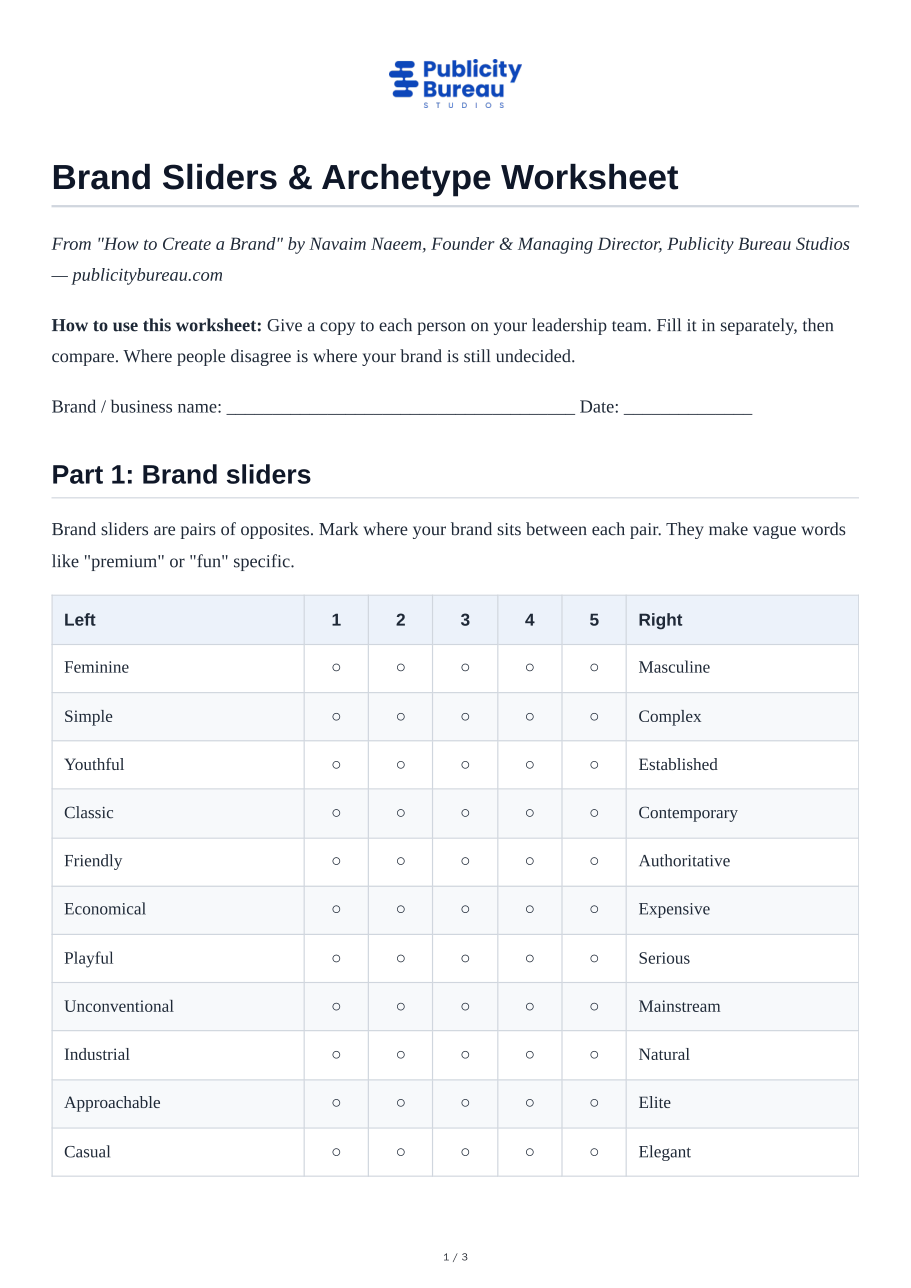
Step 1: Brand sliders
Brand sliders are pairs of opposites. You mark where your brand sits between each pair. They make vague words like "premium" or "fun" specific.
The 12 sliders we use:
| Left | Right |
|---|---|
| Feminine | Masculine |
| Simple | Complex |
| Youthful | Established |
| Classic | Contemporary |
| Friendly | Authoritative |
| Economical | Expensive |
| Playful | Serious |
| Unconventional | Mainstream |
| Industrial | Natural |
| Approachable | Elite |
| Casual | Elegant |
| Refined | Strong |
Try this with your leadership team separately, then compare. Where people disagree is where your brand is still undecided.
Free download: get the brand sliders and archetype worksheet (PDF) to fill in with your team.
Step 2: Choose a brand archetype
A brand archetype is a character type that sums up a brand's personality. There are 12, based on universal themes people recognise across cultures. Picking one keeps every decision consistent, from your Instagram captions to your staff uniforms.
| Archetype | Core desire | Example brands |
|---|---|---|
| Innocent | Happiness | Dove, McDonald's |
| Everyman | Belonging | Levi's, IKEA |
| Hero | Mastery | Nike, BMW |
| Outlaw | Revolution | Harley-Davidson, Red Bull |
| Explorer | Freedom | Jeep, The North Face |
| Creator | Innovation | Apple, Lego |
| Ruler | Control and success | Rolls-Royce, Hugo Boss |
| Magician | Turning dreams into reality | Disney, MAC Cosmetics |
| Lover | Intimacy and connection | Chanel, Victoria's Secret |
| Caregiver | Protecting others | UNICEF, Johnson & Johnson |
| Jester | Fun | Duolingo, M&Ms |
| Sage | Truth and understanding | Google, Discovery Channel |
For example, a mental health awareness campaign like Kihineh sits close to the Caregiver: reassuring, warm and non-judgemental. A luxury resort usually leans Ruler or Lover. A beach café might be Explorer or Jester. Pick one main archetype. A second can add flavour, but no more.
Step 3: Build an ideal customer persona
An ideal customer persona is a short, specific profile of the person you most want to serve. It covers age, occupation, income, motivations and challenges, plus a short story about their life.
Here's a hospitality example. Jessica, 28 to 40, is a marketing manager who values experiences over possessions. She struggles to balance work and social life and wants authentic experiences. A hotel built for her focuses on celebration and connection, not just a nice room.
Write one persona per main audience. A resort might need two: honeymooners and families.
Step 4: Positioning and competitor mapping
Brand positioning is the specific space your brand owns in your customer's mind. To find it, we map competitors on two axes that matter in the category, such as price (low to high) and personalisation (low to high).
The empty quadrant is often your opportunity. In a crowded market like Maldives resorts, being "luxury" isn't a position. Everyone claims it.
Step 5: Write the brand story or manifesto
The brand story covers your mission, vision, history and the emotional journey you offer customers. It's the narrative every channel repeats, from your website's About page to how staff greet guests.
Phase 3: Design — make it visible
Only now do we start designing. Everything in Discovery and Direction becomes the brief.
- Tagline. A short line built from the personality and positioning. It should say what makes you different, not just that you're good.
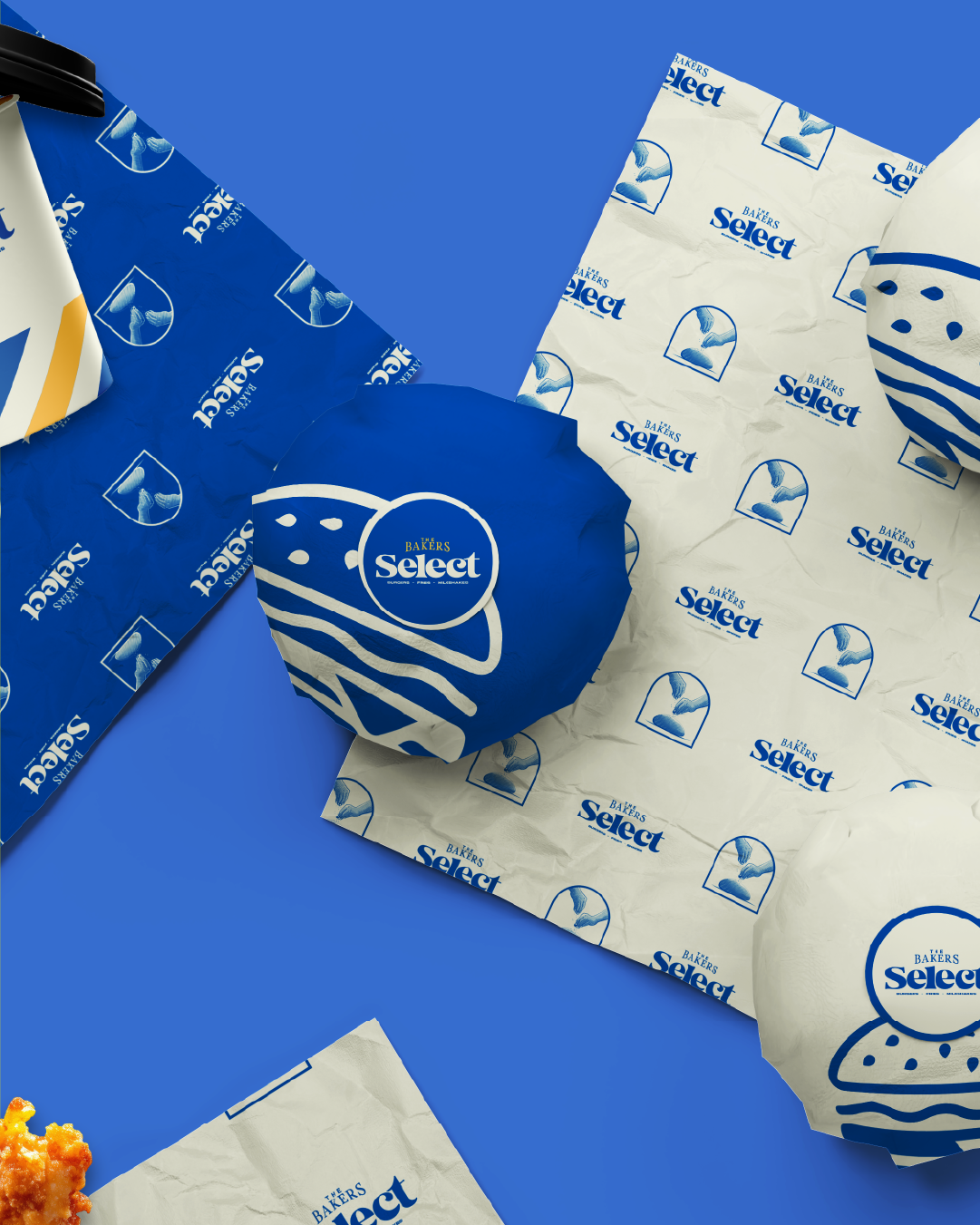
- Naming. For new brands or sub-brands, such as The Bakers Select alongside The Bakers.
- Mood boards. Visual references for colour, typography, photography and texture, matched to the archetype and sliders.
- Visual identity. Logo, colour palette, type system and brand guidelines your team and suppliers can follow.
Because the strategy is agreed first, design rounds are faster. Feedback becomes "is this Caregiver enough?" instead of "I don't like blue."
How long does it take to create a brand?
It depends on scope. A brand refresh like ADK's keeps existing recognition and updates how the brand looks and speaks. A new brand, such as a new café or campaign, needs naming and identity built from scratch. Typically 2–3 months.
Common mistakes when creating a brand
- Starting with the logo. The logo is the last 10% of the work.
- Trying to appeal to everyone. A brand that fits everyone stands out to no one.
- Copying the market leader. You'll always look like the second choice.
- No guidelines. Without rules, your brand drifts every time a new designer or agency touches it.
Frequently asked questions
What are the steps to create a brand?
Discovery (research and interviews), Direction (personality, archetype, persona, positioning, story), and Design (tagline, naming, mood boards, visual identity).
What is the difference between branding and a logo?
A logo is one visual signal. Branding is the whole system: personality, positioning, messaging and visual identity working together.
What are the 12 brand archetypes?
Innocent, Everyman, Hero, Outlaw, Explorer, Creator, Ruler, Magician, Lover, Caregiver, Jester and Sage.
Do I need a branding agency in the Maldives, or can I do it myself?
You can use the process above yourself. An agency helps when you need an outside view, a team that can disagree with you, and professional design. It also helps when you need local knowledge of audiences in the Maldives and the region.
Does PBS work with clients outside the Maldives?
Yes. We work with brands in the Maldives, Sri Lanka, Malaysia and Australia, mostly in hospitality, F&B, healthcare and public-sector communication.
Start your brand with us
Publicity Bureau Studios is a Malé-based branding and brand strategy studio. If you're launching or refreshing a brand, book a Discovery session with us. We'll start with the eight questions above.